
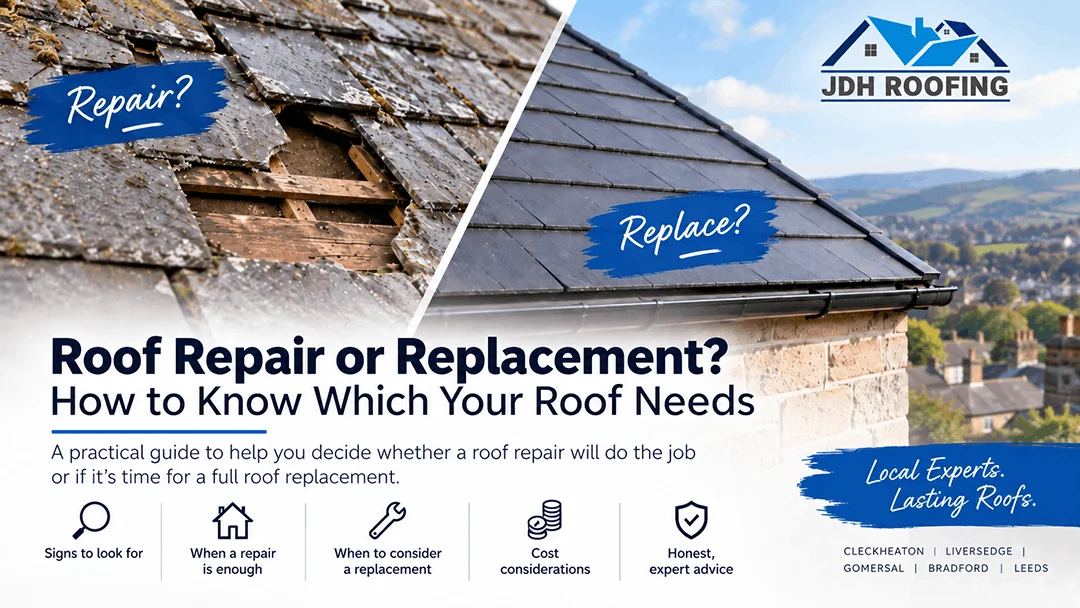
Roof Repair or Replacement? How to Know Which Your Roof Needs
When something goes wrong with your roof, one of the biggest questions is whether it can be repaired or whether the time has come for a full replacement. It is an understandable concern because there can be a big difference in cost between fixing one damaged section and replacing the whole roof. The good news is that not every leak, slipped tile or patch of damage means you need a new roof. In many cases, a properly carried out repair can add years of useful life. The key is understanding whether the problem is isolated or whether it is a sign that the roof as a whole is starting to fail.
A trustworthy roofer should look at the condition of the entire roof before recommending either option. The age of the roof, the number of previous repairs, the condition of the tiles or slates, the felt and battens underneath, ventilation, leadwork and any signs of structural movement all help determine the right approach. Sometimes a relatively small repair is all that is needed. In other cases, continuing to patch an ageing roof can end up costing more than replacing it properly.
When a Roof Repair Is Usually Enough
If the damage is limited to a small area and the rest of the roof is in good condition, repair is often the sensible choice. A few slipped or cracked tiles, a small problem with flashing, a leaking valley or a localised section of damaged pointing can often be dealt with without disturbing the rest of the roof. The same applies when storm damage has affected one particular area but the underlying roof structure remains sound.
The important thing is to repair the cause rather than simply cover the symptom. Replacing a slipped slate may solve the problem if the slate itself was the issue, but if several slates are moving because the fixings or battens beneath them are failing, a more detailed repair may be needed. A proper inspection helps establish whether you are dealing with a one-off problem or the beginning of something more widespread.
Repeated Leaks Can Be a Warning Sign
One leak does not necessarily mean your roof needs replacing, but repeated leaks in different areas deserve closer attention. If repairs are becoming a regular occurrence, it may indicate that the roof covering, underlay, battens or other components are reaching the end of their useful life. Paying for one repair after another can quickly add up, particularly if each new spell of heavy rain reveals another weak point.
At this stage, it is worth looking at the bigger picture. If the roof is otherwise sound and the problems are confined to one section, repairing or replacing that section may still be worthwhile. However, if leaks are appearing across several areas and the roof has already had numerous repairs, replacement may offer better value and much greater peace of mind.
The Age of the Roof Matters, But It Is Not Everything
Roof age is an important factor, but it should never be used on its own to decide whether replacement is necessary. Different roofing materials have very different lifespans, and the quality of the original installation, exposure to the weather and ongoing maintenance all make a difference. A well-maintained slate roof can remain serviceable for many decades, while a poorly installed roof may develop problems much sooner.
If an older roof is still structurally sound and only has occasional localised problems, repairing it may still make perfect sense. On the other hand, if an ageing roof has widespread cracked tiles, failing fixings, worn leadwork and deteriorated materials underneath, spending more money on temporary repairs may no longer be the most economical option.
What Is Happening Beneath the Tiles?
The visible roof covering is only one part of the system. Beneath your tiles or slates sit battens, underlay or membrane, timbers and insulation, all of which help the roof perform properly. These components are normally hidden, which means their condition may only become clear during an inspection or when sections of roof covering are lifted.
Damaged battens, torn or degraded felt, damp insulation and rotten timber can all turn what appears to be a simple surface repair into something more substantial. If deterioration underneath the roof is widespread, replacing the outer covering without dealing with those problems would only hide them. This is one of the situations where a full or partial reroof can make more sense than repeated repairs.
A Sagging Roof Should Always Be Checked
A roofline that appears to sag or dip should not be ignored. Sometimes there may be a relatively straightforward explanation, particularly on older properties, but movement can also indicate problems with rafters, supporting timbers or the roof structure. This is very different from replacing a few broken tiles and needs to be properly assessed before work is recommended.
If you notice a new dip in the roofline, movement around the ridge or obvious changes to the shape of the roof, arrange an inspection rather than attempting a quick repair. Structural problems are best dealt with early, before additional weight, water ingress or bad weather makes them worse.
When Replacing One Section Can Be the Right Choice
Roof replacement does not always have to mean replacing every part of the roof. On some properties, one elevation or section may have deteriorated much faster than the rest because it receives more sun, wind and rain, or because it was installed at a different time. A dormer, extension or one side of a pitched roof may therefore need more substantial work while the rest remains perfectly serviceable.
Partial replacement can sometimes provide a good balance between repairing too little and replacing more than necessary. The existing roof needs to be assessed carefully so that new materials can be integrated properly and the finished roof remains weatherproof. An experienced roofer should be able to explain whether this approach is practical for your property.
When a Full Roof Replacement Makes More Sense
A full replacement becomes more attractive when deterioration is widespread rather than isolated. Large numbers of cracked, loose or missing tiles, repeated leaks, failing underlay, rotten battens, widespread leadwork problems and extensive previous patching can all suggest that the roof is reaching the point where repairs are providing diminishing returns. Instead of paying repeatedly to chase individual problems, replacing the roof allows the entire system to be renewed properly.
A new roof also provides the opportunity to address insulation, ventilation, membranes, battens and roofline details at the same time. Although the initial investment is greater, it can remove years of accumulated problems and give you much more certainty over the condition of the roof above your home.
Consider the Cost of Repeated Repairs
The cheapest option today is not always the cheapest option over the next five or ten years. Spending a few hundred pounds on a repair can be excellent value if it genuinely solves the problem and gives the roof many more years of service. But if you are calling a roofer every year to repair another section, those costs begin to add up.
Keep a record of previous roofing work and consider how often problems are occurring. If several areas have already been repaired and new issues continue appearing, ask the roofer to give you an assessment of the overall condition rather than simply quoting for the latest problem. This allows you to compare the cost of continuing repairs against the longer-term value of reroofing.
A Good Roofer Should Not Recommend a New Roof Unless You Need One
Homeowners sometimes worry that asking a roofing company for advice will automatically result in being told they need a complete new roof. It should not. If a sound, cost-effective repair will solve the problem, a professional roofer should be happy to recommend it. Equally, if the roof has reached the stage where repeated repairs are unlikely to provide good value, they should be able to explain why replacement is the better option.
Ask questions and expect clear answers. Which part of the roof has failed? Is the problem localised or widespread? What condition are the tiles, felt and battens in? How long is a repair reasonably expected to last? Would further repairs be likely in the near future? A good roofer should be able to talk you through the options without putting pressure on you to choose the most expensive one.
Repair or Replace? Look at the Whole Roof
The decision ultimately comes down to condition rather than one single problem. A relatively young, well-maintained roof with isolated damage will often be worth repairing. An older roof with widespread deterioration, recurring leaks and failing materials beneath the tiles may be better replaced. In between those two situations are plenty of roofs where partial replacement or targeted repairs can provide a sensible solution.
This is why getting the roof inspected properly is so important. What appears serious from inside the house may turn out to be a straightforward repair, while a small visible problem can sometimes reveal more extensive deterioration underneath. Knowing what you are actually dealing with gives you the best chance of spending your money in the right place.
Need Help Deciding Whether to Repair or Replace Your Roof?
If you are unsure whether your roof needs repairing, partially replacing or completely reroofing, JDH Roofing can assess the condition of the roof and explain the available options. The aim should always be to recommend the work the property genuinely needs rather than replacing a roof unnecessarily.
Getting advice early can also save money. Small problems are usually easier to deal with before water has had time to damage insulation, ceilings or roof timbers. Whether the answer is a straightforward repair or a new roof, knowing where you stand allows you to plan the work with confidence.