
Why Is My Roof Leaking Around the Chimney? 7 Common Causes
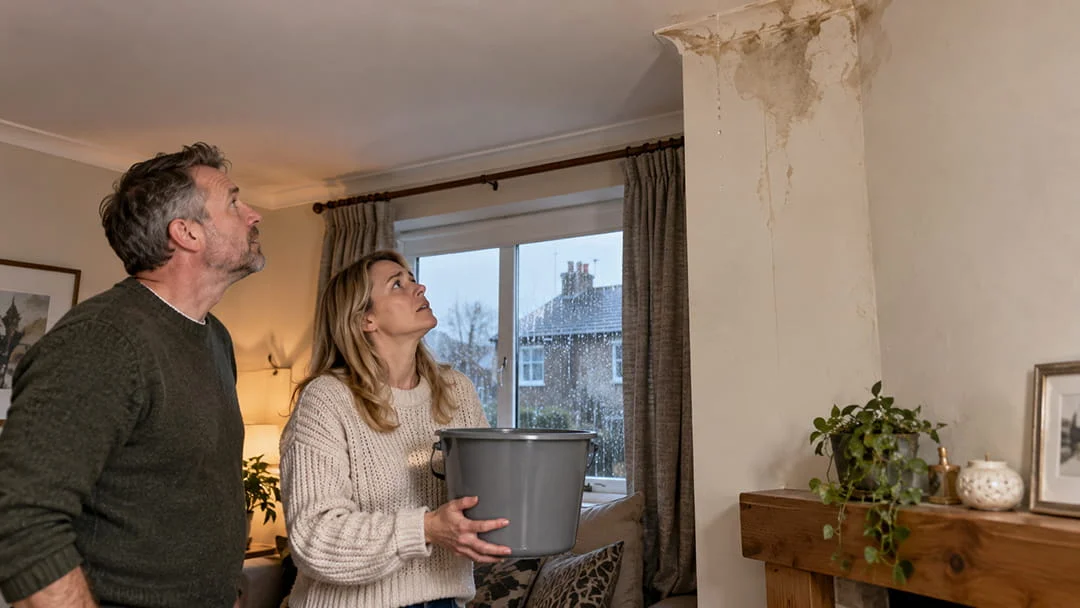
A leak around the chimney is one of those roofing problems that can be frustrating to track down. You may notice a damp patch on the ceiling, staining around the chimney breast or water appearing in the loft after heavy rain, but the point where the water becomes visible is not always where it is getting into the roof. Chimneys create several joints and exposed areas where different materials meet, so there are a number of possible causes.
The good news is that a chimney leak does not automatically mean you need a new roof. In many cases, the problem can be traced to leadwork, pointing, masonry or another localised issue around the chimney. Finding the actual source is the important part, because simply sealing the area where water appears indoors may not solve the problem at all.
1. Damaged or Lifted Lead Flashing
Lead flashing is fitted around the base of a chimney to create a weatherproof seal where the chimney meets the roof. It is one of the most common places to look when water starts appearing around a chimney breast. Over time, lead can lift, split, become loose or pull away from the brickwork, particularly after years of exposure to wind, rain and changing temperatures.
Even a relatively small gap can allow rainwater to travel beneath the roof covering. The water may then run along roof timbers or underlay before becoming visible somewhere inside the property. Properly repairing or replacing damaged flashing can often solve the problem without any need for more extensive roofing work.
2. Cracked or Missing Chimney Pointing
The mortar between chimney bricks has to cope with some of the harshest weather on the property. Because the chimney sits above the roofline, it is exposed to rain, wind, frost and temperature changes throughout the year. Over time, pointing can crack, crumble or fall away, leaving gaps where water can penetrate.
Poor pointing can sometimes be overlooked because the chimney may appear reasonably sound when viewed from the ground. Once inspected more closely, however, loose or deteriorated mortar can become much more obvious. Repointing the affected areas can help prevent water getting into the masonry and protect the chimney structure at the same time.
3. Deteriorating Chimney Flaunching
Flaunching is the mortar or concrete around the base of the chimney pots at the top of the stack. Its job is to hold the pots securely while helping rainwater run away from the chimney rather than collecting around them. Because it is completely exposed to the weather, flaunching can gradually crack and break down.
Once cracks appear, water can enter around the chimney pots and work its way down through the stack. From inside the house, this can look very similar to a flashing or pointing problem, which is why it is important to inspect the whole chimney rather than assuming the first visible defect is responsible.
4. Damaged Chimney Pots or Cowls
Chimney pots and cowls can also allow water into the chimney if they become cracked, loose or damaged. A missing or unsuitable cowl may leave the chimney more exposed to wind-driven rain, while cracked pots can allow moisture to enter through areas that should otherwise remain protected.
Problems at the very top of the chimney can be particularly deceptive because the water may travel quite a distance before appearing lower down. If damp seems to be coming through the chimney itself rather than around the roof covering, the pots, cowls and top of the stack should all be checked as part of the inspection.
5. Failed Roof Junctions Around the Chimney
The area where a pitched roof meets the chimney contains several important details. Tiles or slates need to sit correctly around the stack, flashing has to direct water away and the surrounding roof covering needs to remain secure. If tiles have slipped, slates are cracked or the junction has been poorly repaired in the past, water can find a route underneath.
This is especially common after storms or strong winds, when movement in the roof covering may create a small gap that was not there before. What appears to be a chimney problem may actually be a damaged slate or tile immediately beside it. Checking the whole junction helps ensure the correct part is repaired.
6. Porous or Weathered Chimney Brickwork
Older chimney stacks can become more porous as bricks and mortar weather over the years. During prolonged or wind-driven rain, moisture can soak into deteriorated masonry and eventually work its way through to the inside of the chimney or surrounding roof structure. This can sometimes produce damp patches without there being an obvious hole or missing piece of flashing.
Porous masonry needs to be assessed carefully because simply coating the outside without understanding the condition of the bricks and mortar is not always the right solution. Damaged masonry, pointing and chimney details should be repaired properly so that the cause of the water ingress is dealt with rather than temporarily hidden.
7. The Water May Be Entering Somewhere Else
This is one of the biggest reasons chimney leaks can be difficult to diagnose. Water does not always travel straight down. Once it gets underneath tiles or slates, it can run along underlay, rafters and other roof timbers before eventually dripping into the loft or appearing on a ceiling. A damp patch beside the chimney therefore does not automatically mean the chimney itself is leaking.
The original entry point could be higher up the roof, around a ridge, valley or damaged tile. This is why repeated patching around a chimney sometimes fails to cure the problem. A proper roof inspection should follow the path of the water and check the surrounding roof rather than concentrating only on the place where the damp is visible inside.
Why Chimney Leaks Should Be Dealt With Early
A small amount of water entering around a chimney may not seem urgent at first, particularly if it only appears during very heavy rain. Unfortunately, repeated water ingress can gradually damage roof timbers, insulation, plasterwork and internal decoration. Damp conditions can also encourage mould and timber deterioration if the problem is left unresolved.
Getting the area checked early usually gives you more options. A localised flashing, pointing or tile repair is much easier to deal with than damage that has been allowed to spread through the roof structure. If you notice staining around the chimney breast, damp in the loft or water appearing after bad weather, it is worth having the roof inspected rather than waiting for the next storm.
Be Wary of Quick Sealant Fixes
It can be tempting to cover a suspected gap with roofing sealant and hope the problem disappears. While sealants have legitimate uses, applying them over failing flashing, cracked mortar or damaged masonry is rarely a substitute for a proper repair. It may stop water temporarily while leaving the underlying defect untouched.
A lasting repair should identify why the water is entering and deal with that specific problem. This might involve repairing lead flashing, repointing the chimney, renewing flaunching, replacing damaged slates or dealing with another roof junction. Fixing the cause properly is normally far better value than repeatedly patching the same leak.
Does a Leaking Chimney Mean You Need a New Roof?
In most cases, no. If the rest of the roof is in good condition and the problem is confined to the chimney area, a targeted repair may be all that is required. A trustworthy roofer should inspect the roof and explain the cause before recommending more extensive work. There is no reason to replace a sound roof simply because the flashing or pointing around one chimney has failed.
However, if the inspection reveals widespread deterioration, ageing underlay, damaged battens, numerous slipped slates or repeated leaks elsewhere, it may be worth looking at the condition of the roof as a whole. The important thing is that the recommendation is based on what the property genuinely needs.
Need Help with a Chimney Leak?
If you have noticed water staining, damp or an unexplained leak around your chimney, getting it inspected can help prevent a relatively small problem becoming a much bigger repair. JDH Roofing can check the chimney stack, lead flashing, pointing, roof junctions and surrounding tiles or slates to help identify where the water is actually coming from.
Once the cause has been found, the right repair can be carried out rather than simply treating the visible symptom. Whether the problem is damaged flashing, weathered pointing, failing flaunching or a roofing issue nearby, dealing with it early can help protect both your roof and the inside of your home.