
Temporary Fixes for a Leaking Roof: What Helps and What Makes It Worse
Finding water coming into your home can be stressful, especially during heavy rain or bad weather. A leaking roof can quickly cause damage to ceilings, walls, insulation, electrics and personal belongings, so it is completely understandable to want to act fast. While a proper roof repair should always be carried out by an experienced roofer, there are a few temporary steps homeowners can take to reduce damage and buy a little time until professional help arrives.
The important thing to remember is that temporary fixes are exactly that — temporary. They may help control the situation in the short term, but they should not be seen as a long-term repair. A roof leak usually has an underlying cause, such as slipped tiles, damaged flashing, cracked leadwork, blocked gutters, failed felt, storm damage or general wear. Unless the cause is properly found and repaired, the problem is likely to return.
Start by Protecting the Inside of Your Home
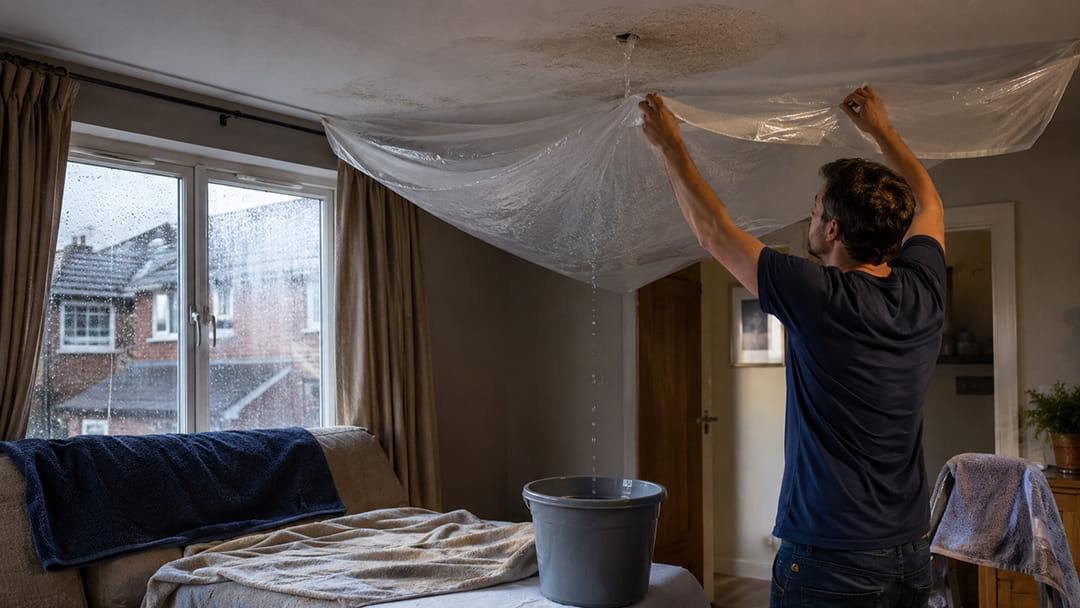
If water is already coming through the ceiling, the first priority is to protect the inside of your property. Move furniture, electrical items, soft furnishings and valuables away from the affected area where possible. Place a bucket, bowl or waterproof container under the leak to catch dripping water, and use towels around the area to stop water spreading across floors or carpets.
If the ceiling is bulging with trapped water, it may be holding more water than it can safely cope with. In this situation, it is best to be cautious and avoid standing directly underneath it. Water and electricity can be dangerous together, so if there is any chance that water is near lights, sockets or wiring, switch off the affected area at the consumer unit and seek professional advice.
Check the Loft If It Is Safe to Do So
If you can safely access your loft, it may help you understand where the water is entering. Use a torch rather than relying on mains lighting, especially if there is water nearby. Look for damp insulation, wet timbers, drips, staining or daylight showing through the roof. However, bear in mind that water can travel before it appears inside the home, so the visible drip may not be directly below the actual problem on the roof.
If you do spot water coming through, you may be able to place a container in the loft to catch it before it reaches the ceiling below. You can also move insulation away from the wet area if it is safe to do so, as damp insulation can hold water and make the damage worse. Avoid stepping between joists or walking on plasterboard, as loft spaces can be unsafe if you are not used to moving around in them.
Use Buckets, Towels and Plastic Sheeting Indoors
Simple indoor protection can make a big difference while you wait for a roofer. Buckets, towels, plastic sheeting and waterproof covers can help limit water damage and protect belongings. If water is splashing as it drips into a bucket, placing an old towel in the bottom can reduce splatter and help keep the surrounding area drier.
Plastic sheeting can also be used to cover furniture, flooring or items stored in the loft. This will not fix the leak, but it can reduce the amount of damage caused inside your home. Try to keep the area ventilated where possible, as trapped moisture can encourage mould and damp if left for too long.
Clear Gutters Only If It Can Be Done Safely
Sometimes a roof leak is made worse by blocked gutters or overflowing rainwater. If gutters are full of leaves, moss or debris, water can back up and find its way into areas it normally would not reach. If the blockage is low-level and can be cleared safely from the ground using suitable tools, this may help reduce the amount of water running towards the problem area.
However, avoid climbing ladders in heavy rain, strong wind or poor light. Wet surfaces can be slippery, and working at height is risky without the right equipment. If the gutters are difficult to reach, or if the roofline is high, it is better to leave this to a professional rather than putting yourself in danger.
Avoid Going Onto the Roof Yourself
When water is coming in, it can be tempting to climb onto the roof and try to fix the problem yourself. This is not recommended. Roofs can be slippery, fragile and dangerous, especially during bad weather. Tiles and slates can break underfoot, flat roofs can be unstable, and one wrong step can lead to serious injury.
Even if the problem looks simple from the ground, it is not worth the risk. A professional roofer has the correct equipment, experience and safety knowledge to inspect the roof properly. Temporary indoor measures are usually much safer than attempting to walk on the roof yourself.
Be Careful with Tarpaulins and Temporary Covers
A tarpaulin can sometimes help protect a damaged section of roof, but only when it is fitted safely and securely. If a tarpaulin is loose, badly fixed or placed in the wrong position, it can flap in the wind, allow water underneath, damage tiles or become a hazard. In strong winds, it may even come away completely.
For this reason, tarpaulins are best handled by roofers or people with the right equipment and access. If a roofer needs to carry out a temporary cover before a full repair, they can make sure it is positioned properly and does not create further problems. A badly fitted cover can make the situation worse rather than better.
Do Not Rely on Sealant as a Proper Repair
Sealant is one of the most common quick fixes people reach for when they notice a leak, but it is rarely a proper long-term solution. While it may slow water down in some situations, it often fails quickly because it does not deal with the real cause of the problem. Sealant can crack, lift, trap moisture or make later repairs more awkward.
This is especially true around chimneys, valleys, flashing and leadwork. These areas need proper detailing, not just a layer of sealant over the top. Using sealant as a temporary measure may buy a small amount of time in some cases, but it should not be treated as a finished repair.
Avoid Blocking Ventilation or Trapping Moisture
When trying to stop water entering, it is easy to accidentally create another problem by blocking ventilation or trapping moisture inside the roof space. Roofs need to breathe, especially where insulation and loft spaces are involved. Covering vents, sealing areas too tightly or leaving wet materials in place can increase condensation and damp.
If insulation has become wet, it may lose effectiveness and hold moisture against timbers or ceilings. This is why a professional inspection is important after a leak, even if the water appears to stop. The visible drip may be gone, but hidden damp can still cause problems if it is not dealt with properly.
Take Photos and Keep Notes
If your roof leak has caused visible damage, it is a good idea to take photos and make notes. Photograph the leak, any damp patches, damaged belongings, water staining, missing tiles if visible from the ground, and any temporary measures you have used. This can be helpful when explaining the issue to a roofer and may also be useful if you need to speak to your home insurance provider.
Try to note when the leak started, whether it happens only during heavy rain, whether wind direction makes it worse, and which room or area is affected. These details can help a roofer narrow down the likely cause and carry out a more accurate inspection.
Call a Roofer Before the Damage Spreads
Temporary fixes can help control the situation, but the sooner the roof is inspected, the better. A small leak can quickly become a bigger issue if water continues to enter the property. What starts as a slipped tile or damaged flashing can lead to damp insulation, rotten timber, stained ceilings and internal repair costs if left too long.
A professional roofer can identify the cause of the leak and recommend the right repair. This may be a simple tile replacement, leadwork repair, guttering issue, flat roof repair, chimney repair or a more detailed section of roof work. The key is to fix the source of the problem rather than just dealing with the water inside the home.
What Temporary Fixes Can Actually Achieve
The aim of a temporary fix is not to solve the roofing problem permanently. It is to reduce immediate damage, keep your home as safe as possible, and buy time until a proper repair can be carried out. Buckets, towels, plastic covers, careful loft checks and safely moving belongings can all help protect your home while you wait for professional advice.
What temporary fixes cannot do is replace proper roofing work. If water has found a way through your roof, there is a reason for it. The safest and most cost-effective approach is to manage the immediate leak indoors, avoid risky DIY work at height, and arrange for a roofer to inspect the roof as soon as possible.
Need Help with a Leaking Roof?
If you have water coming into your home, acting quickly can help reduce damage and stress. A professional roofing company can inspect the problem, explain what is causing the leak and carry out the right repair before the damage gets worse.
Whether the issue is caused by storm damage, slipped tiles, failing leadwork, blocked gutters or general wear and tear, getting the roof checked early gives you the best chance of avoiding more costly repairs later.