
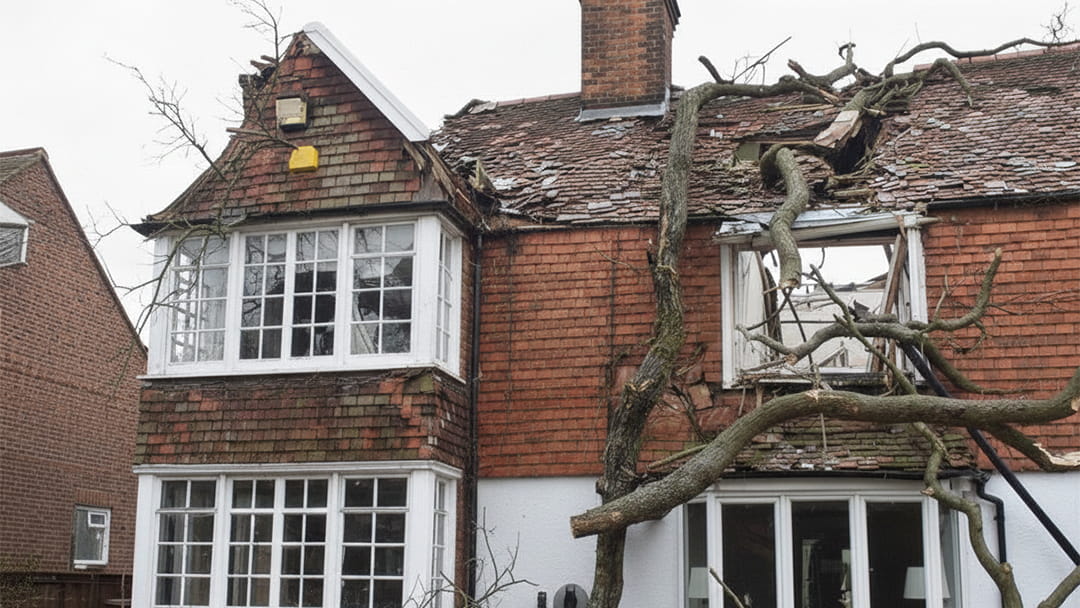
High winds and severe storms can cause significant roof damage in a very short space of time. Even if your property looks unaffected from ground level, strong gusts can loosen tiles, lift flashing, and weaken fixings without creating immediate visible leaks. Knowing what to check after a storm can help you act quickly, prevent further deterioration, and avoid more costly repairs later on.
Start with a Visual Ground-Level Inspection
After high winds, begin with a safe inspection from ground level. Look for slipped, cracked, or missing tiles and slates. Check whether ridge tiles appear uneven or misaligned, as wind uplift often affects these first. Also look for debris in the garden such as fragments of tile, mortar, or lead flashing, which can indicate damage above.
Avoid climbing onto the roof yourself. Storm-damaged roofs can be unstable, and what appears minor may conceal structural movement or weakened fixings.
Check Ridge Tiles and Hip Lines
Ridge and hip tiles are particularly vulnerable during storms because they sit at the highest and most exposed points of the roof. High winds can crack mortar bedding or dislodge mechanically fixed ridge systems. If ridge tiles become loose, water can penetrate beneath them, leading to internal damp issues and further structural strain.
Inspect Flashing and Roof Edges
Lead flashing around chimneys, dormers, and abutments is another common failure point. Strong winds can lift or crease flashing, breaking the watertight seal where the roof meets brickwork. Check roof verges and eaves for signs of movement, as wind uplift often affects these edges first.
Look Inside the Loft Space
If safe to do so, inspect your loft or roof space after a storm. Signs of concern include damp patches on felt or timbers, daylight visible through the roof covering, or insulation that appears wet. Even small water ingress can escalate quickly if left unresolved.
Check Gutters and Downpipes
Storms often dislodge gutters or fill them with debris. Blocked or damaged guttering can cause water to overflow and run back into the roof structure. Make sure gutters are securely attached and free from broken tiles or mortar fragments.
Be Aware of Delayed Problems
Not all storm damage is immediately obvious. Tiles that have shifted slightly may not leak straight away, but over time wind-driven rain can exploit weakened areas. It is common for minor storm damage to develop into more serious issues weeks or months later.
When to Call a Professional Roofer
If you notice missing tiles, loose ridge lines, damaged flashing, or internal damp patches, it is advisable to arrange a professional inspection. A qualified roofer can safely assess the extent of the damage, identify hidden weaknesses, and recommend appropriate repairs before problems escalate.
Protecting Your Property After a Storm
Acting quickly after high winds helps protect both the roof covering and the structural integrity of your home. Prompt repairs reduce the risk of water damage, timber decay, and insulation failure. Even if no obvious damage is visible, a precautionary inspection offers reassurance and peace of mind.