
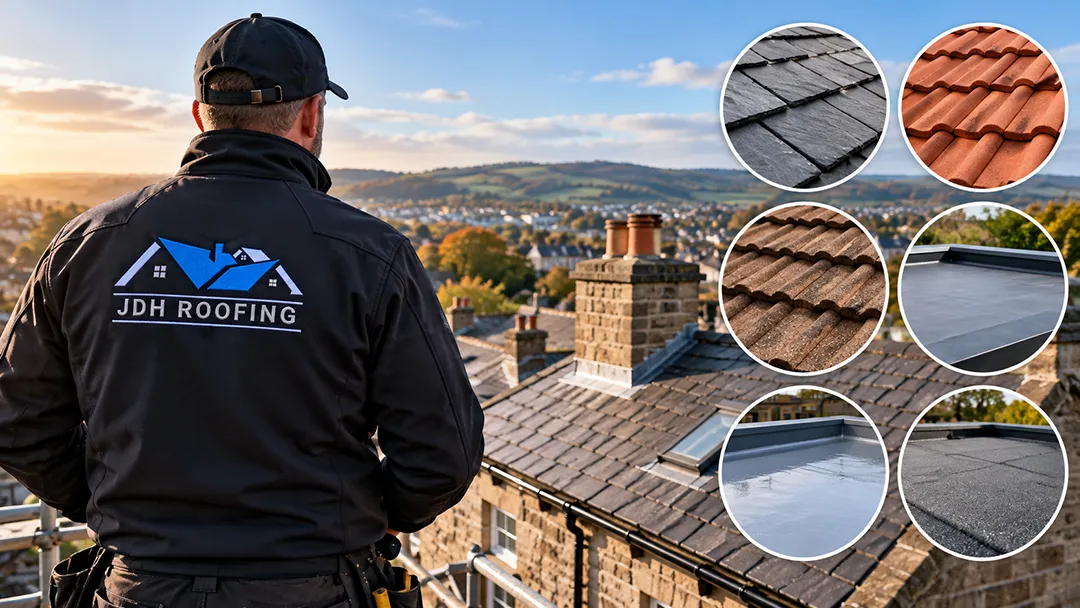
How Long Should a Roof Last? Slate, Tile and Flat Roof Lifespans Explained
One of the most common questions homeowners ask is how long their roof should actually last. The answer depends on much more than the age of the property. Roofing material, installation quality, ventilation, exposure to the weather and how well the roof has been maintained all play a part. Some roofs can remain serviceable for many decades, while others develop problems much earlier because something beneath the surface has started to fail.
That is why it is better to think in terms of expected lifespan rather than a fixed replacement date. A roof that is 40 years old may still be in excellent condition, while a much younger roof could already be showing signs of deterioration if it has been poorly fitted or repeatedly exposed to leaks. Understanding the typical lifespan of different roofing materials can help you know what to expect and when it may be time to start planning ahead.
How Long Does a Natural Slate Roof Last?
Natural slate is one of the longest-lasting roofing materials and is particularly common on older properties across West Yorkshire. A good-quality slate roof can often last 75 to 100 years or more when it has been installed properly and maintained well. In some cases, the slates themselves can outlast the fixings, battens or underlay beneath them, which is why an older slate roof may sometimes need significant work even though much of the visible slate is still in good condition.
Slipped slates are not always a sign that the entire roof needs replacing. Individual slates can fail because of damaged fixings, weather exposure or localised movement. However, if large numbers are slipping, nails are deteriorating or the roof has been patched repeatedly over many years, it may be worth assessing the roof as a whole rather than continuing with isolated repairs.
How Long Do Clay Roof Tiles Last?
Clay tiles are another very durable roofing material and can often remain serviceable for around 50 to 100 years depending on their quality, installation and exposure. They are resistant to rot and can cope well with changing weather conditions, which is one reason they have been used on UK homes for generations.
Individual clay tiles can still crack or become damaged, particularly after frost, impact or movement in the roof. As with slate, the condition of the structure beneath the tiles is just as important as the tiles themselves. A roof may still have good clay tiles but require work because battens, underlay, flashing or other components have deteriorated.
How Long Do Concrete Roof Tiles Last?
Concrete tiles are widely used on UK homes and typically have a shorter expected lifespan than natural slate or good-quality clay. A well-installed concrete tiled roof can often last around 40 to 60 years, although this varies depending on the product, exposure and maintenance. Over time, the surface can weather, fade and become more susceptible to moss and moisture, but appearance alone does not necessarily mean the tiles have failed.
If concrete tiles begin cracking, slipping or becoming porous across large areas, it may be a sign that the roof is reaching the later part of its useful life. However, localised damage can often still be repaired. A proper inspection helps determine whether individual tiles need replacing or whether deterioration is becoming widespread enough to consider reroofing.
How Long Does an EPDM Flat Roof Last?
EPDM rubber roofing has become a popular option for flat roofs because it is flexible, waterproof and relatively resistant to UV exposure. When installed correctly, an EPDM roof can often last 30 to 50 years. Its flexibility helps it cope with the expansion and contraction that happens as temperatures change throughout the year.
As with any flat roof, installation quality is critical. Poorly fitted seams, weak edge details, incorrect drainage or movement in the roof deck can all shorten the lifespan of the system. A good EPDM roof should allow water to drain properly and should be checked occasionally for damage around edges, outlets and roof penetrations.
How Long Does a GRP Fibreglass Roof Last?
GRP fibreglass is another common modern flat roofing system. A professionally installed GRP roof can often last around 20 to 30 years or more, depending on the quality of the materials and the installation. It creates a tough, seamless surface that can work particularly well on extensions, garages and other flat roof areas.
Problems can develop if the roof deck moves, if joints have not been detailed properly or if the system was installed in unsuitable conditions. Cracking around edges or junctions should be checked before water has a chance to penetrate beneath the covering. Good workmanship at the installation stage has a big influence on how well a GRP roof performs over time.
How Long Does a Felt Roof Last?
Modern roofing felt is very different from some of the older felt systems homeowners may remember. A good-quality modern felt roof can often last around 15 to 30 years when correctly installed. Older felt coverings may have a shorter lifespan, especially if they have been exposed to strong sunlight, standing water or repeated patch repairs.
Signs that a felt roof may be reaching the end of its useful life include cracking, blistering, lifting seams and repeated leaks. A small damaged area can sometimes be repaired, but if the covering is deteriorating across the entire roof, replacement may offer better long-term value than continually applying patches.
Why Some Roofs Fail Much Earlier Than Expected
The material on the outside of the roof is only part of the story. Two roofs using exactly the same tiles can have very different lifespans depending on how they were installed. Poor workmanship can lead to problems such as incorrectly spaced battens, weak flashing, poor drainage, badly fitted tiles or inadequate ventilation. These issues may allow water or condensation into the roof long before the covering itself should have worn out.
This is why choosing good materials is important, but choosing an experienced roofer is just as important. A high-quality slate or tile roof will only perform as intended if the whole roofing system beneath it has been designed and installed properly.
Ventilation Can Make a Big Difference
Roof ventilation plays an important role in protecting the materials you cannot see. Without enough airflow, moisture can build up within the roof space and lead to condensation. Over time, this can affect insulation, battens and roof timbers, even when the outer covering looks perfectly sound.
Modern roofing systems are designed to manage both water from outside and moisture from inside the home. Suitable ventilation, breathable membranes and correctly installed insulation all help create a healthier roof structure and can reduce the risk of hidden deterioration.
Underlay and Battens Do Not Last Forever
It is easy to assume that if the tiles still look good, the roof must be fine. However, underlay and battens beneath the roof covering can deteriorate with age, moisture or repeated leaks. Older roofing felt can become brittle or damaged, while timber battens can weaken if they remain damp for long periods.
This can explain why some older roofs suddenly begin suffering from repeated slipped tiles or leaks even though the tiles themselves still appear usable. When inspecting an ageing roof, it is important to consider the complete roof structure rather than simply looking at what can be seen from the ground.
West Yorkshire Weather Takes Its Toll
Roofing materials in West Yorkshire have to cope with plenty of changing weather. Rain, strong winds, frost, snow and periods of hot sunshine all place stress on roof coverings and joints. South-facing areas may receive more UV exposure, while roofs in exposed locations can suffer greater wind pressure and driving rain.
Freeze-and-thaw cycles can also affect tiles, mortar and masonry. Moisture enters small cracks, freezes when temperatures drop and expands, gradually making the damage worse. A roof in a sheltered location may therefore age very differently from an identical roof on a more exposed property.
Trees and Moss Can Shorten a Roof’s Life
Properties surrounded by trees often experience more leaves, shade, moss and debris on the roof. Moss itself does not automatically mean the roof is failing, but heavy growth can hold moisture and contribute to blocked gutters and drainage. Falling branches can also damage tiles or slates during storms.
Keeping gutters clear and monitoring excessive moss growth can help prevent avoidable problems. However, aggressive pressure washing is generally not a good idea because it can damage roof coverings. If moss has become extensive, it is better to ask a roofer what treatment is appropriate for the particular roof material.
Previous Repairs Can Tell You a Lot
A roof that has had one or two well-executed repairs over many years may still have plenty of useful life left. A roof covered in different patches, sealants and repeated repair areas tells a different story. If you find yourself calling a roofer every year for another leak or slipped section, the overall condition of the roof may need to be considered.
There comes a point where continuing to pay for individual repairs is no longer the most economical option. That does not mean every older roof automatically needs replacing, but looking at the frequency and cost of previous repairs can help you decide whether it is time to invest in a more permanent solution.
How Do You Know When Your Roof Is Nearing the End of Its Life?
There is no single warning sign, but several problems appearing together should prompt a closer inspection. Repeated leaks, widespread cracked or slipped tiles, failing leadwork, sagging areas, deteriorated underlay and numerous previous repairs can all suggest the roof is approaching the point where replacement may make more sense than further patching.
The age of the roof should be considered alongside its condition. A good roofer should be able to explain what is failing, whether the problem can still be repaired and what sort of lifespan you could reasonably expect from that repair. If a sound repair can give the roof many more years, replacing it unnecessarily makes little sense.
Can Maintenance Help a Roof Last Longer?
Yes. Regular maintenance does not make roofing materials last forever, but it can help you get the most from them. Keeping gutters clear, replacing slipped tiles, repairing damaged flashing and dealing with small leaks before they spread can prevent water from reaching parts of the roof that are much more expensive to repair.
It is also worth checking the roof after severe storms or periods of particularly bad weather. Many major roofing problems start with something small that could have been repaired relatively easily if it had been noticed earlier.
Should You Repair or Replace an Older Roof?
An older roof does not automatically need replacing. If the structure is sound and problems are limited to one area, a repair can still be excellent value. On the other hand, if deterioration is widespread and the roof has already required numerous repairs, reroofing can provide greater certainty and allow the entire system to be renewed.
A replacement also gives you the opportunity to address underlay, battens, ventilation and insulation at the same time. Rather than simply fitting new tiles, a properly planned reroof can improve the performance of the whole roof and give you confidence in the structure for many years to come.
How Long Has Your Roof Got Left?
Typical roofing lifespans are useful as a guide, but they cannot tell you exactly how long your particular roof has left. A 60-year-old slate roof may still be in excellent condition, while a much younger tiled roof can suffer premature problems because of poor installation or hidden water damage. The only reliable way to understand its condition is to look at the roof itself.
If your roof is getting older, has started leaking or has needed several repairs recently, JDH Roofing can inspect it and explain what condition it is in. Whether the best option is a small repair, partial reroof or full replacement, understanding the condition now can help you plan ahead rather than waiting for an emergency.